



Progesterone in Oil Side Effects: 3 Essential Groups
Quick Answer: Progesterone in oil can cause side effects in three essential groups: local soreness or firmness where the shot was given, broader hormone-type symptoms, and urgent warning signs. Mild injection site pain, breast tenderness, spotting, bloating, nausea, fatigue, or mood changes can happen, but spreading redness, warmth, fever, a hard painful lump, chest pain, shortness of breath, fainting, or signs of an allergic reaction should be taken seriously. Your prescribing fertility clinic is the right first call for non-emergency concerns because it knows your protocol, dose, timing, and transfer plan. For severe symptoms or trouble breathing, use your clinic’s after-hours line or 911 rather than waiting for an in-home visit.
This guide is meant to help you sort what patients commonly notice from what deserves a call. It does not diagnose symptoms or replace your clinic’s instructions. Hopeful Beginnings IVF is not a fertility clinic; your prescribing fertility clinic diagnoses, prescribes, sets doses, monitors your cycle, and performs retrieval or transfer. Hopeful Beginnings provides in-home injection support, medication preparation as prescribed, and teaching for patients and partners who need help with the injection process.
Progesterone in oil: why it is used in an IVF cycle
Progesterone is a hormone that helps prepare and support the uterine lining during the luteal phase of an IVF cycle. In many IVF protocols, patients receive supplemental progesterone after egg retrieval or around embryo transfer because the body’s normal hormone signaling can be altered by fertility medications and cycle timing. The exact form, start date, and duration are individualized by the prescribing clinic.
ASRM ReproductiveFacts explains that progesterone supplementation in IVF is usually started on the day of or the day after egg retrieval. Your clinic may give different instructions based on your cycle type, transfer timing, lab results, and medication plan. Do not start, stop, skip, repeat, or change the timing of any medication unless your clinic tells you to.
Progesterone may be prescribed in different forms, including intramuscular injections, vaginal preparations, or other routes. This article focuses on the oil-based intramuscular form that many patients call PIO. If your clinic prescribed progesterone-in-oil injections, it will also tell you exactly when to take them and how they fit with the rest of your plan.
The “oil” part matters because it affects how the injection feels. An oil-based medication is thicker than many water-based injections, and intramuscular shots are placed into muscle rather than the fatty layer just under the skin. That combination can make soreness, stiffness, and firmness around the injection area more noticeable than with many subcutaneous fertility shots.
Side effects patients may notice in three main groups
It can be easier to think about side effects in three groups: local injection-site changes, broader medication effects, and urgent warning signs. Local changes are what you feel or see where the shot was given. Broader medication effects are symptoms that can happen away from the injection area, such as breast tenderness or spotting. Warning signs are symptoms that should prompt urgent evaluation or emergency care.
The progesterone injection label lists “pain, irritation, and/or redness at the injection area” among reported effects, and it also lists symptoms such as breakthrough bleeding, breast tenderness, nausea, somnolence, edema, weight change, and mood-related symptoms. The DailyMed progesterone injection label is written in medical-label language, so your clinic is still the best source for how those risks apply to you.
DailyMed labeling also describes progesterone-class medication concerns such as irregular bleeding, breast-related symptoms, abdominal cramping or bloating, nausea, fluid retention, and serious allergic-type reactions. Because a prescribing label is not specific to every IVF protocol or every oil formulation, use it as general education and follow your clinic’s written instructions.
Injection site pain after an intramuscular oil shot
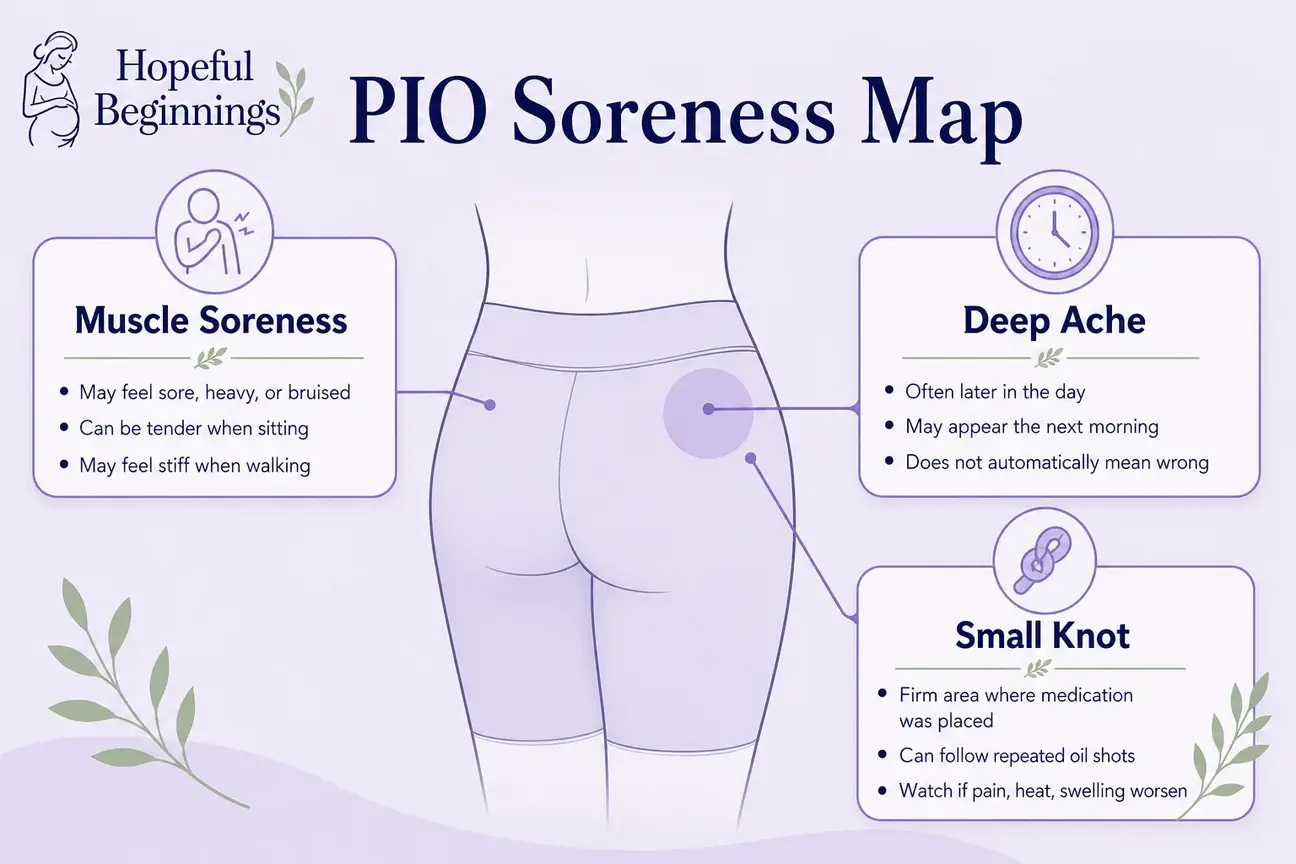
Injection site pain is one of the most common things patients ask about with PIO. The area may feel sore, heavy, bruised, tender when sitting, or stiff when walking. Some people feel a deep ache in the muscle later in the day or the next morning. Others notice a small knot or firm area where the medication was placed.
That discomfort does not automatically mean anything is wrong. An intramuscular oil medication can leave the muscle feeling irritated, especially when injections are repeated over many days. Mild redness, a small bruise, or a tender spot can happen after many injections. The key question is whether the area is gradually settling down or becoming more painful, hot, swollen, or widespread.
Injection site pain can also feel more intense when a patient is tense, rushed, or anxious during the shot. Muscle tension can make the injection area resist the medication more, which may increase soreness afterward. That is one reason calm setup, steady positioning, and clear role assignments between patient and partner matter. Your clinic or injection teacher can show you what technique it wants you to use.
A small amount of oiliness on the skin or a tiny spot of bleeding after the shot may happen. Use the instructions your clinic gave you for aftercare. Do not change injection locations, technique, needle size, medication temperature, dose timing, or any other part of the plan based on online advice. If the same area is getting more painful or you are unsure whether the reaction is expected, call your clinic.
What local reactions can be common?
Many patients describe a pattern: the shot itself is brief, then the muscle feels sore or firm for several hours. The next day, the area may feel like a deep bruise. As injections continue, patients may become more aware of which areas feel tender and which areas feel easier. Your clinic’s site-rotation instructions matter because repeated shots in the same tender area can make discomfort build.
Common local reactions may include mild soreness, mild redness, small bruising, temporary firmness, or stiffness around the muscle. These reactions are not a reason to change the plan on your own. They are a reason to watch the area, follow the written instructions, and ask the clinic if the reaction is worsening or different from what you were told to expect.
If a partner is giving the shot, the emotional piece matters too. A partner may worry that soreness means they “did it wrong,” while the patient may worry that a normal ache means the medication did not go where it should. Those are understandable concerns. Injection teaching can help both people understand the clinic’s preferred process and reduce guesswork.
When local symptoms deserve a clinic call
Call your clinic if the injection area develops spreading redness, warmth, fever, pus, a hard painful lump, worsening swelling, or pain that feels out of proportion to what you were told to expect. Also call if you cannot comfortably bear weight, if the pain is getting worse instead of easing, or if you are repeatedly unable to give the shot as instructed.
This does not mean every tender spot is dangerous. It means your clinic should help you decide what to do next because it knows your medication, formulation, dose schedule, and medical history. Hopeful Beginnings can provide in-home injection support as prescribed, but urgent or worsening symptoms need the clinic’s medical direction first.
Breast tenderness, spotting, and other body-wide symptoms
Breast tenderness can happen with progesterone and can feel similar to premenstrual breast soreness for some patients. It may show up as fullness, aching, nipple sensitivity, or discomfort when wearing a bra. Breast tenderness can also overlap with other cycle medications and early pregnancy-type symptoms, which is why it is not a reliable sign of whether a cycle worked.
Spotting can also happen while taking progesterone. The DailyMed label lists breakthrough bleeding and other bleeding-pattern changes among possible progesterone-related effects. If spotting is light, your clinic may have already told you how it wants you to report it. If you were not given instructions, or if the bleeding is heavier, persistent, accompanied by significant pain, or worrying to you, call the clinic.
Bloating, abdominal cramping, nausea, fluid retention, fatigue, sleepiness, and mood changes may also be noticed. The challenge is that IVF patients often take several medications, go through procedures, and live with intense anticipation during the same window. A symptom may relate to progesterone, another medication, the cycle itself, or something unrelated. Your clinic is the right place to sort that out.
Some patients feel frustrated because the side effects overlap with symptoms they are watching closely after transfer. Breast tenderness, spotting, bloating, nausea, and fatigue can feel emotionally loaded. Try not to use any single symptom as a verdict on the cycle. Continue the plan exactly as prescribed unless the clinic changes it.
Spotting: what to report and what not to guess about
Spotting is one of the most stressful symptoms because it is visible and easy to monitor. Light spotting may occur for several reasons during fertility treatment, including medication effects or cervical irritation, but you should not diagnose the cause yourself. If your clinic gave you a reporting threshold, follow that. If it did not, call and ask how it wants you to handle spotting during your specific stage of treatment.
Do not stop progesterone because of spotting unless your clinic specifically instructs you to. Do not add an extra dose, repeat a dose, or change the injection time to “make up for” spotting. Those decisions belong to your prescribing fertility clinic. If bleeding becomes heavy, is accompanied by severe pain, or you feel faint or unwell, use urgent instructions from your clinic or emergency care.
Mood, sleepiness, and the emotional load of treatment
Progesterone labels include symptoms such as somnolence and mood-related symptoms. Some patients feel sleepier, more tearful, more irritable, or emotionally stretched during this part of treatment. The medication may be one piece, but IVF itself can be physically and emotionally demanding. It is reasonable to tell your clinic if mood changes are significant, persistent, or concerning.
Support is not only about the injection. It can include reducing the number of decisions you have to make at night, teaching a partner a repeatable routine, or having a licensed medical professional handle the shot when the process feels too heavy. For reassurance around the injection experience, Hopeful Beginnings offers IVF injection guidance focused on comfort, confidence, and following the clinic’s written plan.
Allergic reaction and other red-flag symptoms
An allergic reaction is not something to watch casually. Progesterone injection labeling describes hypersensitivity-type reactions, including serious reactions, and patients should take symptoms such as rash, hives, itching, swelling, trouble breathing, trouble swallowing, fainting, or chest symptoms seriously.
Call 911 or seek emergency care for trouble breathing, swelling of the face or throat, fainting, chest pain, or severe symptoms that feel sudden or frightening. If symptoms are urgent but you are unsure whether to call 911, use your clinic’s after-hours line and emergency services. Do not wait for an in-home injection appointment when severe symptoms are present.
The progesterone injection label also notes rare but serious respiratory concerns, including acute eosinophilic pneumonia reported with progesterone in sesame oil. The label describes reported cases with fever, shortness of breath with low oxygen, and lung findings. This does not mean most patients will experience this, but it is a reason to take new fever plus breathing symptoms seriously and seek prompt medical evaluation.
Other urgent symptoms during fertility treatment can include severe abdominal pain or swelling, shortness of breath, rapid weight gain, very little urine, chest pain, fainting, or signs of an allergic reaction. These symptoms should go to the clinic’s after-hours line or 911. Hopeful Beginnings does not provide emergency or urgent care.
Expected versus call-the-clinic symptoms
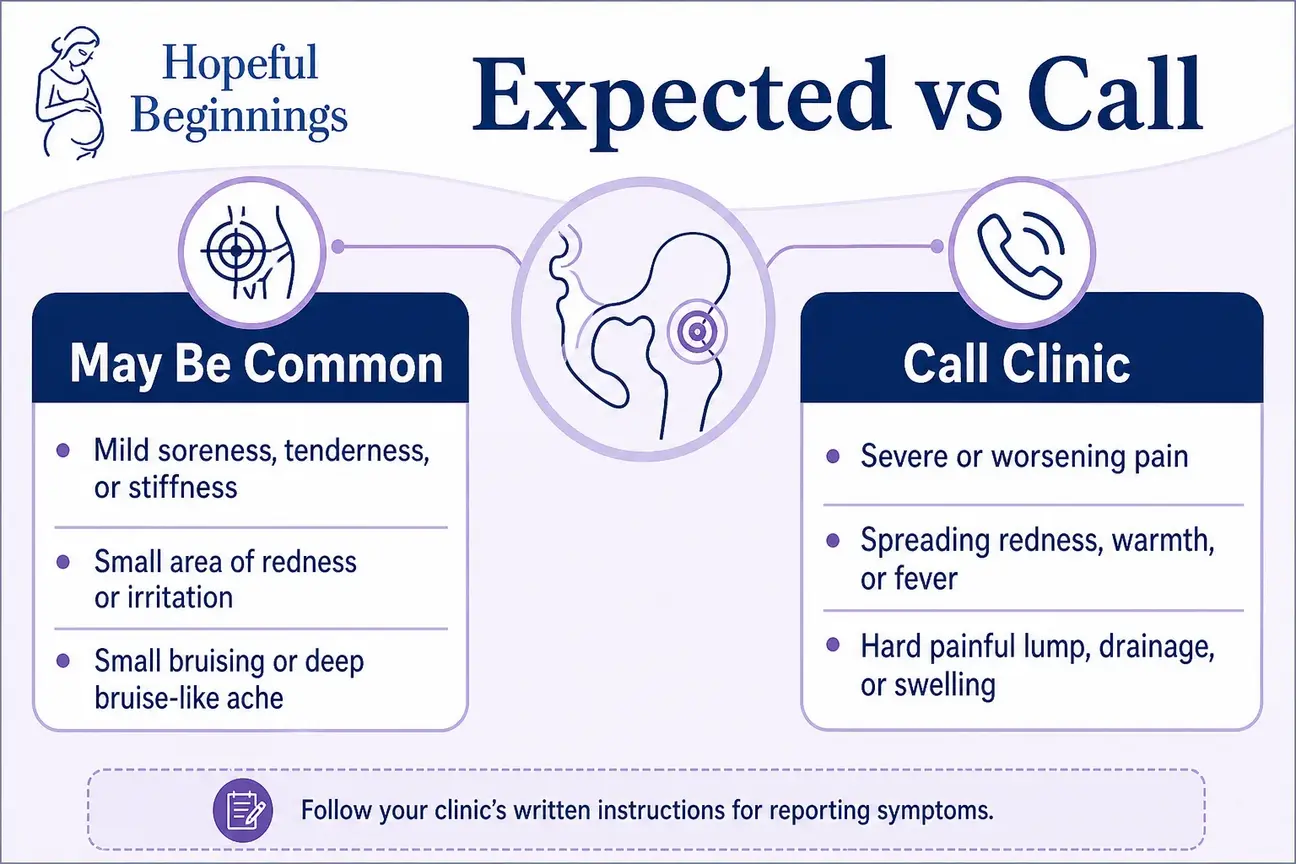
The table below separates common observations from symptoms that should be reported. It is not a diagnosis tool. If your clinic’s written instructions are more specific than this table, follow your clinic’s instructions.
| What you notice | May be expected or common | Call the clinic or seek urgent care when |
|---|---|---|
| Injection site pain | Mild soreness, tenderness, stiffness, or a deep bruise-like ache after the shot | Pain is severe, worsening, associated with fever, or paired with spreading redness, warmth, or a hard painful lump |
| Redness or irritation | Small area of mild redness or irritation near the injection area | Redness spreads, feels hot, becomes very painful, or occurs with fever or drainage |
| Bruising or firmness | Small bruise or temporary firm spot where injections are repeated | A lump is hard, enlarging, very painful, warm, or does not match what your clinic told you to expect |
| Breast tenderness | Fullness, soreness, or sensitivity that can overlap with hormone effects | Pain is severe, one-sided with concerning changes, or your clinic told you to report it |
| Spotting | Light spotting can occur and may be listed with progesterone effects | Bleeding is heavy, persistent, accompanied by significant pain, or you are unsure what your clinic wants you to do |
| Allergic-type symptoms | Not something to ignore or manage casually | Rash, hives, itching, swelling, trouble breathing or swallowing, fainting, or chest symptoms need urgent guidance or emergency care |
A table can make the categories look neat, but real symptoms do not always stay in neat categories. If something feels wrong, new, or different from what your clinic prepared you for, call. It is better to ask early than to guess, especially during a transfer cycle when medication timing and continuity matter.
What to do before changing anything
When side effects show up, the natural instinct is to troubleshoot immediately. Patients may wonder whether to massage more, change sides, move the shot, alter the time, warm the medication, or skip a dose because the area hurts. Those decisions should not be made from a blog post. Your clinic’s medication sheet and direct instructions are the standard you should follow.
If you miss a dose, give it late, spill medication, are unsure whether the full dose was delivered, or vomit after another medication, call your clinic right away and do not guess or double up. The clinic may have very specific instructions based on your transfer timing and hormone plan. Hopeful Beginnings can help administer injections as prescribed, but the clinic decides what to do about medication problems.
Keep a simple note of what you are noticing: when the symptom started, which side was used, whether redness is spreading, whether there is fever, and whether you have breathing symptoms, chest pain, dizziness, heavy bleeding, or severe pain. This helps the clinic triage your concern. If symptoms are severe or breathing is affected, call 911 instead of waiting to gather notes.
How preparation and teaching can reduce uncertainty
Good preparation does not remove every ache or bruise, but it can reduce confusion. Before the first PIO shot, make sure you know exactly where your clinic wants the injection placed, how the medication should be prepared, what supplies are required, and when the dose is due. If you are unsure, ask the clinic before the scheduled dose rather than improvising at the last minute.
For many patients, the hardest part is not the medication itself; it is the feeling that every small step carries high stakes. Injection teaching can give a partner a calm, repeatable routine. It can also help the patient understand what the clinician is doing and what sensations may happen afterward. Hopeful Beginnings offers injection plans that include teaching and scheduled support around the clinic’s written dosing instructions.
During a visit, a licensed medical professional can review the clinic’s order, prepare the medication as prescribed, administer the injection, and talk through comfort measures that fit within the clinic’s plan. For a broader view of what a visit includes, the fertility injection service page explains support for medication preparation, injection administration, and comfort coaching.
If needle anxiety is part of the challenge, say so early. Anxiety can make the body tense and can make injection site pain feel more intense. A plan for breathing, positioning, distraction, and partner roles may help the process feel more manageable. If emotional distress becomes overwhelming, you feel unsafe, or you are in crisis, seek immediate support through emergency services or the 988 Suicide & Crisis Lifeline.
Home support for Raleigh, Cary, and Triangle patients
For patients in Cary, Raleigh, and the Triangle, the practical question is often, “Can someone help with this at home?” Hopeful Beginnings IVF provides in-home injection support for the fertility medications your clinic prescribed, including PIO intramuscular injections. Visits are in the patient’s home; Hopeful Beginnings is not a fertility clinic and does not provide monitoring, lab work, retrievals, transfers, prescriptions, or emergency care.
Home support can be helpful when a partner is unavailable, a patient is anxious about giving the shot, or the dose time is difficult to manage around work, travel, or family routines. Evening, weekend, and holiday appointments are available, and after-10 p.m. and holiday visits are priced separately. Call for pricing, and have your clinic’s written medication instructions ready when you reach out.
To ask about scheduling, you can request an appointment, call 910-200-2337, or email info@hopefulbeginningsivf.com. If timing is a concern, review the flexible injection scheduling page and contact your prescribing clinic for any medical timing questions. Hopeful Beginnings schedules around the clinic’s instructions; it does not change them.
For patients who want support in the home rather than asking a partner or friend, in-home fertility injections may make the process feel more structured. The goal is comfort, confidence, correct preparation, and on-time administration as prescribed. It is not a guarantee of pregnancy, live birth, or a better IVF success rate.
What your clinic decides, and what Hopeful Beginnings can help with
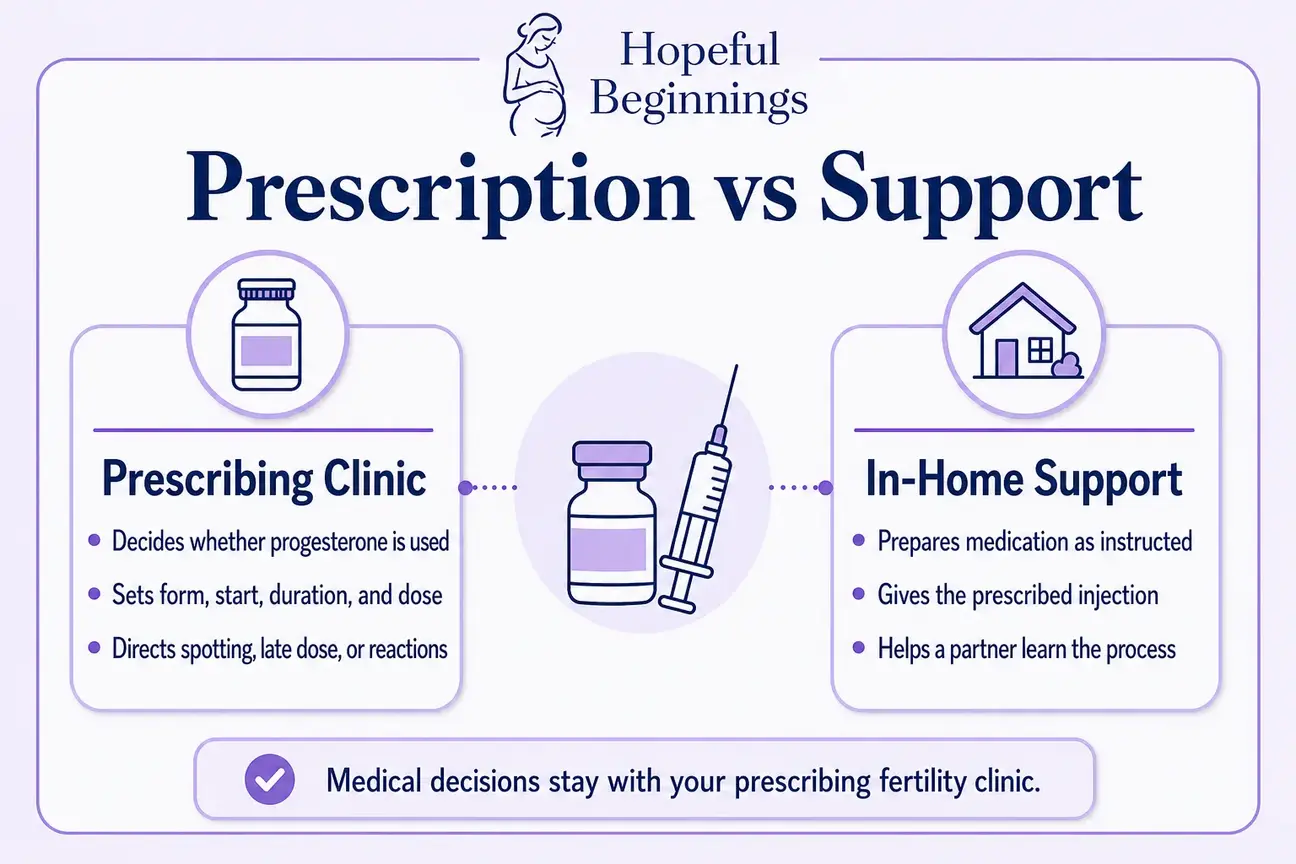
Your prescribing fertility clinic decides whether progesterone is part of your protocol, which form you use, when it starts, how long it continues, what dose is prescribed, and what symptoms should be reported based on your medical situation. It also decides what to do if there is spotting, a late dose, a spill, a possible allergic reaction, or concerning injection-site changes.
Hopeful Beginnings can help with the hands-on part when the clinic has already prescribed the medication. That may include preparing the medication as instructed, giving the injection, helping a partner learn the process, and offering calm guidance during the appointment. The support is practical and reassuring, but it does not replace medical decision-making by the clinic.
If you are preparing for a transfer cycle, it may help to put your clinic’s written medication instructions, medication vials, syringes, supplies, sharps container, and clinic phone number in one place before each appointment. Confirm what you are supposed to do if the dose is late, if the injection site becomes concerning, or if bleeding occurs. Asking before there is a problem can reduce stress later.
The most important safety habit is simple: do not guess. If the concern is routine but unclear, call the clinic. If symptoms are severe, breathing is affected, chest pain occurs, you faint, or you have signs of a serious allergic reaction, use emergency care. If the injection itself is the barrier, in-home support may help you follow the plan your clinic already created.
A calm way to track side effects without over-monitoring
Tracking can be helpful when it stays simple. Write down the date, injection side, brief notes about soreness, and any symptoms you need to report. Avoid repeatedly pressing on the area or checking it so often that anxiety rises. If you are comparing every sensation hour by hour, ask your clinic what changes truly matter and what can be watched.
It is also reasonable to ask your clinic what it considers normal for your exact formulation. Some patients use progesterone in sesame oil; others may receive a different compounded or pharmacy-prepared formulation based on the clinic’s prescription and pharmacy supply. Do not switch products or substitute formulations unless your clinic prescribes that change.
When you call the clinic, be specific: “I have a warm red area that is spreading,” “I have light spotting,” “I have a hard painful lump,” or “I have hives and trouble breathing.” Clear descriptions help the team decide whether you need routine instructions, same-day evaluation, after-hours guidance, or emergency care.
Progesterone in oil side effects can feel unsettling because they happen during an emotionally important part of treatment. Many symptoms are manageable, but some should never be brushed off. Your clinic’s instructions come first, and in-home injection support can help with the administration piece when the medication has already been prescribed.
This article is for general education and is not medical advice. Follow the written instructions from your prescribing fertility clinic, and contact your clinic before changing any dose, medication, injection time or technique.
Frequently Asked Questions
Is soreness after a PIO shot normal?
Mild soreness, stiffness, bruised feeling, or a tender spot can happen after an intramuscular oil injection. Call your clinic if the pain is severe, worsening, paired with fever, or associated with spreading redness, warmth, drainage, or a hard painful lump.
Is spotting normal while taking PIO?
Light spotting can happen while using progesterone, but your clinic should tell you what it wants reported. Do not stop, repeat, or change a dose because of spotting unless your prescribing fertility clinic tells you to.
Can PIO cause breast tenderness or bloating?
Breast tenderness, bloating, nausea, fluid retention, and fatigue can be noticed with progesterone or during an IVF cycle. These symptoms can overlap with other medications and cycle changes, so ask your clinic if symptoms are new, severe, or worrying.
What injection-site changes should I call the clinic about?
Call your clinic for spreading redness, warmth, fever, drainage, a hard painful lump, worsening swelling, or pain that feels more intense than expected. Your clinic can decide whether you need treatment, a technique review, or further evaluation.
Could a rash or trouble breathing be an allergic reaction?
Yes. Rash, hives, itching, swelling, trouble breathing, trouble swallowing, fainting, or chest symptoms can signal a serious reaction. Use your clinic’s after-hours line or 911 for urgent symptoms rather than waiting for a home visit.
What should I do if I miss, spill, or give the dose late?
Call your prescribing fertility clinic right away. Do not guess, double up, repeat a dose, or change the next injection time unless the clinic specifically tells you to.
Can someone else give the shot at home?
Yes, a partner or family member may be taught if your clinic’s plan allows it, and Hopeful Beginnings can provide in-home support for injections that your clinic prescribed. The clinic still decides the medication, dose, and timing.
Does PIO feel different from subcutaneous IVF shots?
Often, yes. PIO is an oil-based intramuscular injection, so patients may notice deeper soreness or firmness than with many subcutaneous injections. Your clinic’s technique instructions should guide how and where it is given.