


For many families in the Research Triangle, the path to parenthood eventually leads to the door of a fertility clinic. Whether you are navigating the halls of a major university health system in Durham or seeking the personalized touch of a private practice in Raleigh, the question is always the same: What are my chances?
In 2026, interpreting an IVF success rate is more complex than ever. With the integration of Artificial Intelligence in the embryology lab and a shift toward “Precision Medicine,” a simple percentage no longer tells the full story. This 3,000-word guide is designed to help Raleigh-area patients decode the data, compare local clinics with clinical accuracy, and understand the specific variables that influence a live birth.
Part 1: The "Triangle Advantage" – Why Raleigh is a Global Hub for IVF in 2026
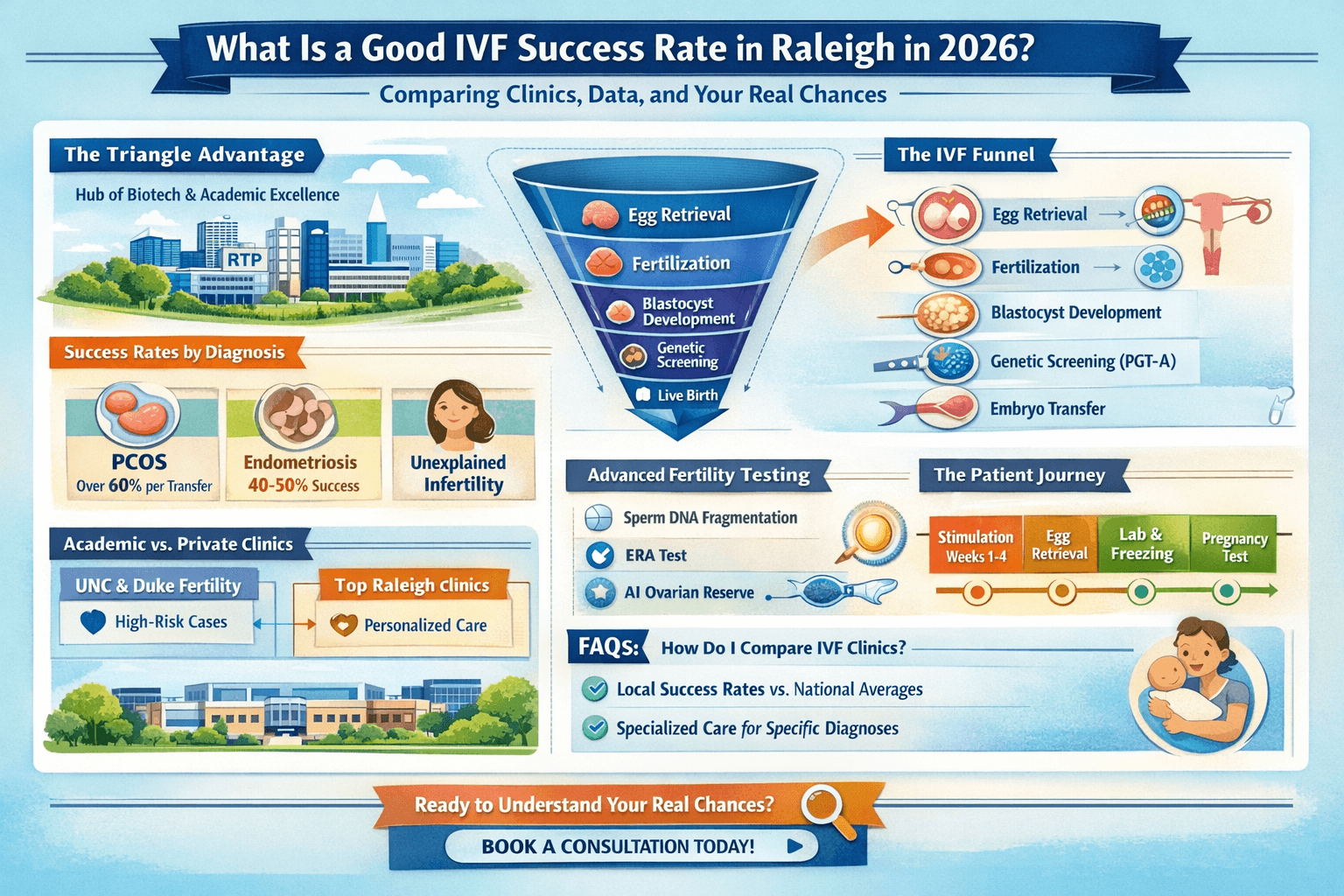
The Raleigh–Durham–Chapel Hill region has solidified its reputation as the “Silicon Valley of Reproductive Medicine.” Patients traveling here from across the Southeast benefit from a unique ecosystem of biotechnology, academic research, and clinical excellence.
The Influence of Research Triangle Park (RTP)
The proximity to RTP means that many Raleigh fertility clinics are the first to adopt pilot technologies. In 2026, this includes non-invasive embryo screening and advanced cryopreservation techniques developed in partnership with local biotech firms. When you evaluate IVF Services, you aren’t just looking at a medical procedure; you are looking at the culmination of decades of local scientific advancement.
Academic vs. Private Excellence
The Triangle is unique because it offers a “dual-track” system. You have the large-scale research power of UNC Fertility and Duke Fertility, alongside agile, high-success private clinics. While university programs are excellent for high-risk obstetric cases, private clinics in Raleigh often lead the way in Patient Experience (PX) and Time-to-Pregnancy metrics, as they can more rapidly implement new lab protocols without the bureaucratic delays of a large hospital system.
Part 2: Understanding the "IVF Funnel" – From Retrieval to Live Birth
To understand a “good” success rate, you must understand the attrition that happens at every stage of the IVF process. This is what specialists call the “IVF Funnel.”
-
The Stimulation Phase: How many follicles are recruited via medications?
-
The Retrieval: How many eggs are successfully collected?
-
The Fertilization Rate: Using ICSI (Intracytoplasmic Sperm Injection), how many eggs become embryos?
-
The Blastocyst Rate: How many embryos survive to Day 5 or Day 6?
-
The Genetic Screen (PGT-A): How many embryos are chromosomally “Euploid” (normal)?
-
The Implantation: Does the embryo successfully attach to the uterine lining?
-
The Live Birth: Does the pregnancy result in a healthy baby?
In Raleigh, a “good” clinic will provide you with their specific “Blastocyst Conversion Rate.” In 2026, a high-performing lab should see 40–60% of fertilized eggs reach the blastocyst stage. If a clinic’s rates are significantly lower, it may indicate an issue with lab air quality or incubator stability.
Part 3: Success Rates by Specific Diagnosis (PCOS, Endometriosis, and Unexplained)
General statistics often fail to account for why you are seeking IVF. In the Triangle region, we see a high volume of specific diagnoses that require tailored protocols.
PCOS (Polycystic Ovary Syndrome)
Patients with PCOS often have a high “egg count” but may struggle with egg quality. Success rates for PCOS in Raleigh are generally higher than average—often exceeding 60% per transfer—because modern “Trigger” medications have virtually eliminated the risk of Ovarian Hyperstimulation Syndrome (OHSS), allowing for safer, high-yield retrievals.
Endometriosis and Success
Endometriosis can affect both egg quality and the receptivity of the uterine lining. In 2026, success for “Endo” patients has improved significantly due to the use of the ReceptivaDX test and prolonged Lupron suppression before a transfer. A “good” success rate for stage III or IV endometriosis is typically 40–50% per transfer.
| Age Group | Live Birth Rate (Per Cycle) | Euploidy Rate (Embryo Quality) |
| Under 35 | 54% – 60% | ~75% Normal |
| 35 – 37 | 42% – 48% | ~50% Normal |
| 38 – 40 | 28% – 35% | ~30% Normal |
| 41 – 42 | 14% – 19% | ~15% Normal |
| Over 42 | 5% – 8% | <10% Normal |
Unexplained Infertility
This is the most frustrating diagnosis for many Raleigh couples. However, IVF is often the definitive “test” for unexplained infertility. By observing the eggs and sperm in the lab, we often discover fertilization issues that were previously invisible. Once these are bypassed, success rates typically mirror those of the “Under 35” age bracket.
Part 4: The Role of Advanced Fertility Testing in 2026
You cannot achieve a high success rate with a “one-size-fits-all” approach. In 2026, the standard of care in Raleigh includes:
-
Sperm DNA Fragmentation: Moving beyond a simple count and motility test to look at the genetic integrity of the sperm.
-
ERA (Endometrial Receptivity Analysis): A “mock cycle” biopsy that determines the exact hour your uterus is ready for an embryo.
-
AI-Driven Ovarian Reserve Testing: Using AMH and Antral Follicle Counts (AFC) to predict the exact medication dosage needed to maximize egg yield without compromising quality.
Before starting IVF, ensure your clinic performs these deep-dive diagnostics. Choosing a clinic based on price alone often leads to “failed cycles of discovery” where the first cycle is essentially an expensive test. We prefer to do the testing upfront.
Part 5: Comparing the "Human Factor"
Data is only as good as the hands that produce it. When comparing clinics in the Triangle, the physician’s philosophy on “difficult cases” is paramount.
The “Transfer Policy”
In 2026, the gold standard is eSET (Elective Single Embryo Transfer). If a clinic has a high “Multiples Rate” (twins or triplets), it is an immediate red flag. It suggests they are trying to mask poor lab quality by “throwing more darts at the board.” A top-tier Raleigh clinic will have a singleton birth rate of over 95% while maintaining high overall success.
The Lab Team
While the doctor gets the headlines, the embryologists are the unsung heroes of your success rate. Ask if the lab is “Open” or “Closed.” A “Closed” system, where embryos are rarely moved or exposed to ambient air, is the 2026 standard for high-performance clinics.
Part 6: Geographic Targets – Success in Raleigh, Cary, and Durham
Where you live in the Triangle can actually influence your treatment experience.
-
Raleigh/Cary: This area hosts several high-volume private clinics. The convenience of having monitoring appointments (ultrasounds and bloodwork) near major hubs like North Hills or Cary’s Fenton development reduces the “cortisol load” on the patient, which many studies suggest improves IVF outcomes.
-
Durham/Chapel Hill: Home to the university systems, these are the hubs for patients who may need multi-disciplinary care (e.g., cardio-obstetrics or oncology).
Regardless of where you reside, your clinic should be within a 30–45 minute drive, as you will be visiting frequently during the “Stimulation” phase (often every other day for 10–12 days).
Part 7: The Real Cost of Success and Financing
In 2026, a “good” IVF success rate is also one that is financially sustainable. The average cost of an IVF cycle in North Carolina ranges from $12,000 to $20,000, excluding medications.
Why the “Success-Based” Model is Trending
Many Raleigh clinics now offer “Refund Guarantees.” This is a commercial investigation point: if a clinic is willing to bet on your success by offering a refund if you don’t bring home a baby, it shows high confidence in their lab. However, be sure to read the fine print regarding age and diagnostic exclusions.
Employer Coverage in the Triangle
The Triangle is a leader in fertility benefits. Companies like Apple, Google, Fidelity, and SAS offer robust coverage. Before paying out-of-pocket, consult with your HR department or your clinic’s financial coordinator to see if your “success” can be fully or partially funded by your employer.
Part 8: The Patient Journey – A Week-by-Week Breakdown
To help you visualize your “real chances,” here is what a standard 2026 IVF journey looks like at a premier Raleigh clinic:
-
Weeks 1-2: Diagnostic Priming. Detailed Fertility Testing and birth control or estrogen priming to synchronize follicles.
-
Weeks 3-4: Stimulation. Self-administered injections. Monitoring every 48 hours in Raleigh or Cary.
-
The Procedure: Egg retrieval under light sedation.
-
The Lab Week: Fertilization, AI-monitored growth, and (if elected) PGT-A biopsy.
-
The “Freeze-All” Period: Allowing the body to reset (usually 3–4 weeks).
-
The Transfer: A 15-minute outpatient procedure.
-
The Two-Week Wait: The lead-up to the pregnancy test.
Part 9: Rich FAQ – Deep-Dive Decision Support
How do I compare SART data between a small Raleigh clinic and a large national network?
When comparing a local “boutique” clinic to a national network, focus on the Live Birth Rate per New Patient. National networks often have high total numbers, but their “per patient” success may be lower due to a standardized, non-individualized approach. A local Raleigh clinic often excels in “customized stimulation,” which can result in higher quality eggs for patients who haven’t responded well to standard protocols.
What is the impact of North Carolina’s climate and lifestyle on IVF success?
While “climate” doesn’t directly change your DNA, the Raleigh area offers a high “Quality of Life” index that supports fertility. Access to the American Tobacco Trail, Umstead State Park, and a wealth of holistic fertility practitioners (acupuncture, specialized nutrition) allows patients to maintain lower systemic inflammation. In 2026, many Raleigh clinics integrate “Integrative Medicine” into their success metrics because a relaxed, healthy patient often responds better to hormonal stimulation.
Why does “IVF Success Rate by Age” drop so sharply after 37?
The “cliff” at age 37 is primarily due to chromosomal segregation errors. As eggs age, the “machinery” (spindle fibers) that divides chromosomes becomes prone to errors. By age 40, more than 60% of embryos are likely to be aneuploid. This is why Raleigh clinics focus heavily on “Embryo Banking” for patients in this age group—collecting embryos from multiple retrievals before attempting a transfer to ensure at least one healthy child is possible.
If I live in Chapel Hill, should I drive to Raleigh for treatment?
In the Triangle, the “best” clinic is the one whose lab results (SART data) match your specific diagnosis. If a Raleigh clinic has a 10% higher success rate for your age group than a closer clinic in Chapel Hill, the 30-minute drive is a minor trade-off for a significantly higher chance of success on the first attempt. Always prioritize lab excellence over driving distance.
Is PGT-A testing mandatory for “good” success rates in 2026?
It is not mandatory, but it is a “Success Multiplier.” Without PGT-A, we select embryos based on how they look (morphology). With PGT-A, we select based on their actual DNA. In Raleigh, using PGT-A can increase the success rate of a single transfer from 45% to over 65% for women over 35, and it nearly eliminates the risk of miscarriage due to chromosomal issues.
How does the “Fertility Clinic Raleigh Comparison” change for LGBTQ+ families?
For LGBTQ+ individuals and couples, “success” often involves third-party reproduction (egg donation, sperm donation, or surrogacy). In 2026, Raleigh has become a destination for these services because North Carolina has favorable legal frameworks for parentage. Success rates for donor-egg IVF in Raleigh are among the highest in the country, often exceeding 75% per transfer because the biological age of the egg remains young.
What should I look for in Physicians regarding “Innovation”?
Look for mentions of “Time-Lapse Imaging” (like EmbryoScope) and “Electronic Witnessing Systems.” These technologies ensure that embryos are never misidentified and are monitored without being disturbed. A physician who invests in these technologies is prioritizing the safety and success of your future child.
Conclusion: Confidently Choosing Your Raleigh IVF Partner
Choosing an IVF clinic is a massive undertaking. In the Raleigh–Durham–Chapel Hill area, you are fortunate to have access to world-class options. Remember that a “good” success rate is one that feels attainable for you, backed by transparent data and a medical team that treats you as a person, not a percentage.
At Hopeful Beginnings IVF, we pride ourselves on maintaining some of the most consistent IVF outcomes 2026 has to offer. We combine the high-tech precision of a national research hub with the compassionate, individualized attention of a local Raleigh practice.
Ready to stop looking at general stats and start looking at your real chances?
Book your Contact / Consultation today and let us help you interpret the data for your specific journey.
Disclaimer: IVF success rates are retrospective and do not guarantee future results. Always consult with a board-certified Reproductive Endocrinologist (REI) to discuss your specific medical history and diagnostic testing results.
FAQ:
What is a good IVF success rate in Raleigh for someone under 35?
A good IVF success rate for patients under 35 in Raleigh typically falls between 50% and 60% per cycle when measured as live birth rate. However, this number can vary depending on several factors including ovarian reserve, embryo quality, and clinic protocols. It’s important to evaluate whether the clinic reports live births rather than pregnancies and whether their patient population reflects your own profile. Clinics that treat more complex cases may report slightly lower averages but provide stronger individualized outcomes.
How do IVF success rates in Raleigh compare to national averages?
IVF success rates in Raleigh and the Triangle region are generally aligned with or slightly above national averages due to access to advanced medical infrastructure and experienced fertility specialists. However, national comparisons can be misleading because success rates vary widely depending on patient demographics and reporting standards. Always compare clinics using age-specific live birth rates rather than overall averages to ensure a fair comparison.
What factors influence IVF success rates the most?
The most influential factor is age, followed by ovarian reserve, embryo quality, and underlying fertility diagnosis. Additional factors include lifestyle habits such as smoking and weight, as well as clinic-specific elements like lab quality and treatment protocols. A comprehensive fertility evaluation is critical to understanding your unique success probability.
Why do some clinics report higher IVF success rates than others?
Some clinics may appear to have higher success rates because they selectively treat patients with better prognoses or report success metrics in ways that are more favorable, such as per embryo transfer instead of per cycle. This is why transparency and full data reporting are essential when comparing clinics.
Should I choose a clinic based solely on success rates?
No, success rates should be one of several factors considered. You should also evaluate physician experience, treatment personalization, patient reviews, and available technologies. A clinic that offers tailored treatment plans and comprehensive care may provide better long-term outcomes even if its headline success rate is slightly lower.
How many IVF cycles does it usually take to achieve pregnancy?
Many patients require more than one IVF cycle to achieve a successful pregnancy. While some may succeed on the first attempt, cumulative success rates increase significantly after two or three cycles. Understanding this helps set realistic expectations and financial planning.
What is the difference between live birth rate and pregnancy rate?
The live birth rate measures the percentage of IVF cycles that result in a baby being born, while the pregnancy rate measures only the initial confirmation of pregnancy. Since not all pregnancies result in live births, the live birth rate is considered the most reliable and meaningful metric.
Are IVF success rates improving in 2026?
Advancements in reproductive technology, including improved embryo freezing techniques and genetic testing, continue to improve IVF success rates. However, individual outcomes still depend heavily on patient-specific factors and clinic expertise.
Is IVF worth it financially and emotionally?
IVF can be both financially and emotionally demanding, but for many patients, it provides the best opportunity to achieve pregnancy. Understanding your realistic chances, planning financially, and choosing the right clinic can significantly improve your experience and outcomes.
Sources
-
What is a good IVF success rate in Raleigh (CDC ART Success Rates Overview)
-
IVF success rates Raleigh NC and how to interpret clinic data (CDC IVF Success Estimator)
-
How to compare IVF clinics and success rates (SART Patient Guide to IVF Success Rates)
-
Fertility clinic Raleigh comparison using national ART data (CDC National ART Surveillance System)
-
IVF success rate by age and national benchmarks (SART compiled data summary)
-
IVF outcomes 2026 and how SART vs CDC data differ (Clinic data comparison explanation)