


IVF injections are one of the most important phases of the in-vitro fertilization process. During ovarian stimulation, fertility medications encourage the ovaries to produce multiple mature eggs instead of the single egg typically released during a natural cycle. Understanding the IVF injection timeline helps patients prepare for treatment and reduces uncertainty about daily medication routines.
Although every fertility protocol is slightly different, most IVF cycles follow a similar pattern of hormone injections, monitoring appointments, and egg maturation preparation. This guide explains what typically happens during the stimulation phase of IVF and how the injection schedule supports successful egg retrieval.
Patients undergoing IVF treatment at fertility clinics in Raleigh, Cary, Durham, and throughout the North Carolina Triangle often receive detailed medication schedules from their physicians. Knowing what to expect at each stage of stimulation can make the experience more manageable and less stressful.
What Is the IVF Injection Timeline?
The IVF injection timeline refers to the schedule of fertility medications used during the ovarian stimulation phase of an IVF cycle. These injections stimulate the ovaries to produce multiple follicles containing eggs and help fertility specialists control ovulation timing. Most stimulation protocols last between 8 and 14 days, followed by a trigger shot that prepares the eggs for retrieval.
During this period, fertility specialists monitor hormone levels and follicle growth closely to ensure the ovaries respond appropriately to medication.
Why the IVF Stimulation Timeline Matters
Controlled ovarian stimulation is essential for successful IVF treatment because it increases the number of eggs available for fertilization. In a natural menstrual cycle, the body usually releases only one egg. IVF medications modify this process by encouraging multiple follicles to mature at the same time.
Producing multiple eggs during a single cycle improves the likelihood that healthy embryos will develop after fertilization.
The stimulation timeline also allows physicians to precisely control the reproductive cycle. This controlled approach helps coordinate egg retrieval with embryo development and laboratory fertilization procedures.
Day-by-Day IVF Injection Timelinep
Below is a typical IVF stimulation schedule. Exact protocols vary based on individual patient factors, including ovarian reserve, age, and previous fertility treatment history.
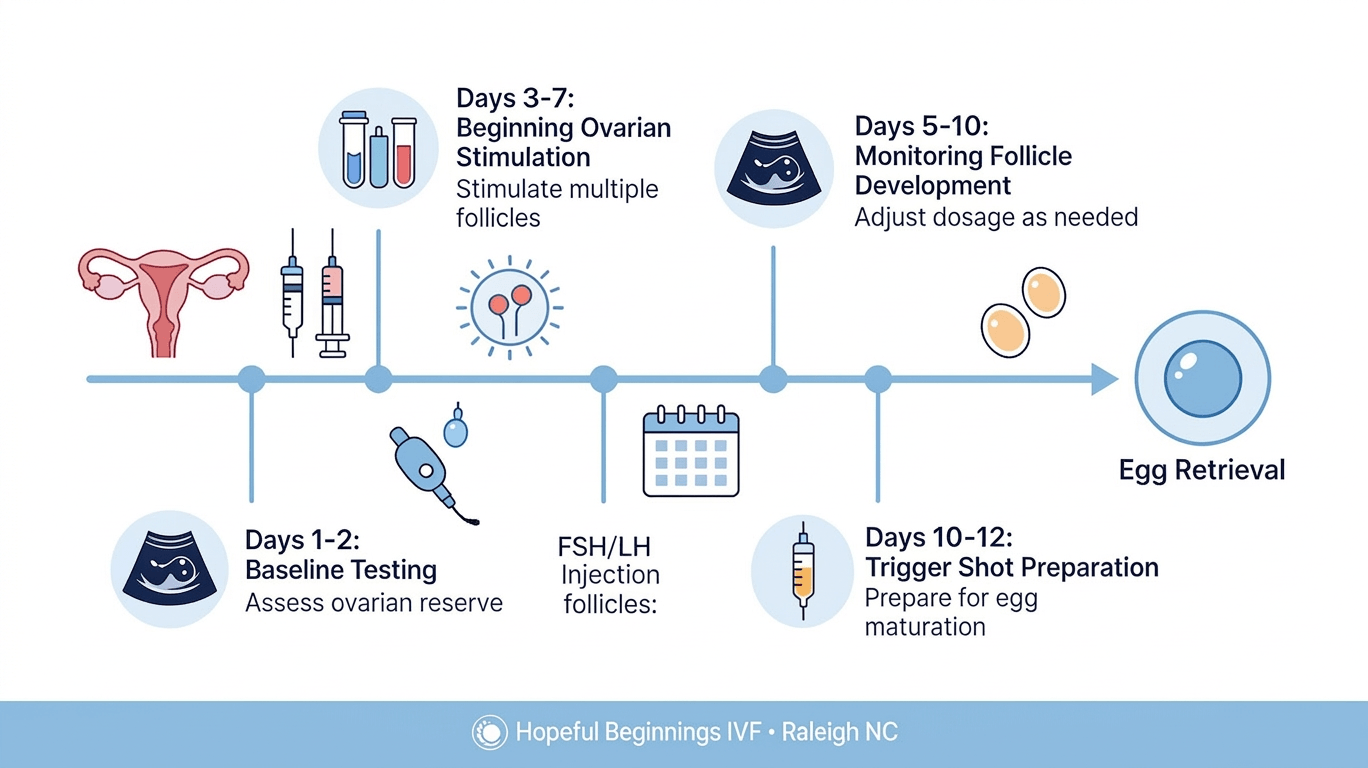
Days 1–2: Baseline Testing
Before IVF injections begin, fertility specialists perform baseline tests to evaluate hormone levels and confirm the ovaries are ready for stimulation.
These tests typically include:
-
ultrasound imaging
-
blood hormone analysis
-
ovarian follicle assessment
Baseline testing ensures medications are started at the correct time and helps physicians determine the appropriate stimulation protocol.
Days 3–7: Beginning Ovarian Stimulation
During this phase patients begin daily fertility injections designed to stimulate follicle development.
Common medications used during ovarian stimulation include:
-
follicle-stimulating hormone (FSH)
-
luteinizing hormone (LH)
-
gonadotropin combinations
These hormones encourage the ovaries to develop multiple follicles simultaneously.
Most injections during this stage are administered subcutaneously in the lower abdomen.
Days 5–10: Monitoring Follicle Development
As ovarian stimulation progresses, fertility specialists monitor follicle growth using ultrasound imaging and blood tests. Monitoring appointments allow physicians to track how the ovaries respond to medications and adjust dosage if necessary.
During this phase, patients may begin additional medications that prevent premature ovulation.
Monitoring typically occurs every few days and becomes more frequent as follicles approach maturity.
Days 10–12: Trigger Shot Preparation
Once follicles reach an appropriate size, patients receive instructions to administer the trigger injection.
This injection contains hormones that finalize egg maturation and prepare the body for egg retrieval.
Timing is extremely important during this stage because egg retrieval must occur approximately 34–36 hours after the trigger shot.
Egg Retrieval Procedure
Egg retrieval is a minimally invasive procedure performed under sedation at the fertility clinic.
During the procedure:
-
a thin needle retrieves eggs from ovarian follicles
-
ultrasound guidance ensures precision
-
eggs are transferred to the embryology laboratory
Fertilization occurs shortly after retrieval.
Medications Used During the IVF Injection Timeline
Several types of medications may be used during stimulation.
| Medication Type | Purpose |
|---|---|
| Gonadotropins | Stimulate follicle development |
| GnRH antagonists | Prevent premature ovulation |
| Trigger injection | Final egg maturation |
Examples of commonly prescribed medications include:
-
Gonal-F
-
Follistim
-
Menopur
-
Ganirelix
-
Cetrotide
The exact medication protocol is determined by a fertility specialist based on each patient’s reproductive health profile.
What Patients May Feel During IVF Stimulation
Hormonal medications used during ovarian stimulation can produce temporary physical changes.
Common symptoms include:
-
bloating
-
mild abdominal pressure
-
breast tenderness
-
mood changes
-
fatigue
These symptoms occur because multiple follicles are developing simultaneously within the ovaries.
Most side effects improve shortly after egg retrieval.
When to Contact Your Fertility Clinic
Patients should contact their fertility provider if they experience:
-
severe abdominal pain
-
rapid weight gain
-
persistent nausea
-
shortness of breath
These symptoms may indicate ovarian hyperstimulation syndrome (OHSS), a rare but possible complication of fertility medications.
Fertility specialists monitor patients carefully throughout stimulation to minimize this risk.
IVF Treatment in the Raleigh NC Triangle
Many patients undergoing IVF treatment in the Raleigh, Cary, and Durham area receive care from reproductive endocrinology clinics located throughout the Research Triangle.
Hopeful Beginnings IVF provides support services for individuals navigating the injection phase of fertility treatment.
Understanding the IVF injection timeline helps patients feel more confident while managing daily medications and preparing for egg retrieval.
Conclusion
The IVF injection timeline is one of the most important stages of fertility treatment. During ovarian stimulation, hormone medications help the ovaries produce multiple eggs while fertility specialists carefully monitor follicle development.
Although the process involves daily injections and frequent monitoring, understanding the purpose of each step helps patients feel more prepared and less overwhelmed during treatment.
Patients who are well-informed about the stimulation phase often find it easier to manage their medication schedule and communicate effectively with their fertility care team.
FAQ:
When do IVF injections usually start?
IVF injections typically begin early in the menstrual cycle, usually on day two or three after menstruation begins. At this stage, fertility medications stimulate the ovaries to develop multiple follicles containing eggs.
How many days do IVF injections last?
Most IVF stimulation protocols require daily injections for approximately 8 to 14 days. The exact duration depends on how the ovaries respond to medication and how quickly follicles mature.
How many injections are needed during IVF?
Most patients administer one or two injections per day during ovarian stimulation. The total number of injections depends on the medication protocol prescribed by the fertility specialist.
Are IVF injections done at home?
Yes. Most IVF injections are designed to be administered at home. Fertility clinics provide detailed instructions so patients can safely prepare and administer medications.
Do IVF injections cause weight gain?
Some patients experience temporary bloating or fluid retention during ovarian stimulation. These symptoms typically resolve after egg retrieval.
Sources
- In Vitro Fertilization (IVF) Overview – American Society for Reproductive Medicine
- In Vitro Fertilization (IVF) Process – Mayo Clinic
- Assisted Reproductive Technology and Fertility Treatments – National Institute of Child Health and Human Development
- IVF Treatment and Ovarian Stimulation Explained – NHS
- Assisted Reproductive Technology Statistics and Treatment Information – Centers for Disease Control and Prevention